|
|
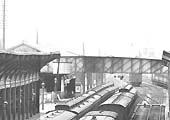
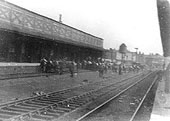
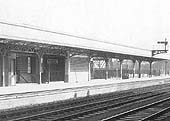
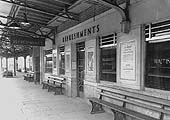
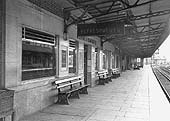
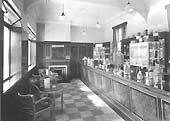
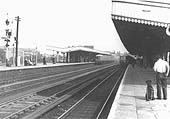
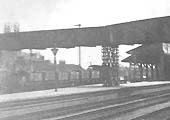
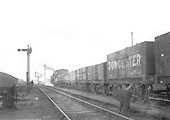
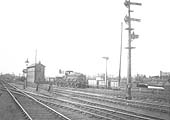
Leamington Spa Station (GWR)
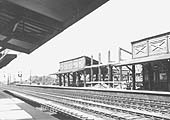
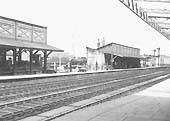
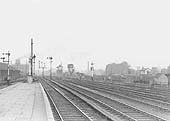
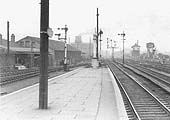
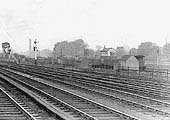
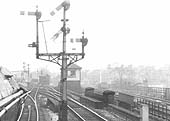
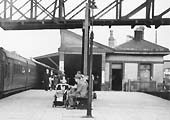
A brief overview of the station
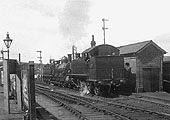
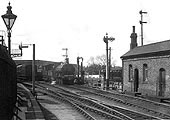
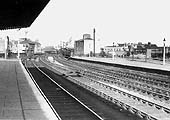
Leaminton Station is located on Old Warwick Road towards
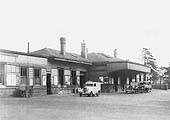
the southern edge of the town centre. The station was opened in 1852 by the
Great Western Railway as part of the Birmingham to Oxford line. Its opening
compelled the LNWR to build in 1854 their own Leamington station which was
located adjacent to the GWR station. In 1864 a link was made between the GWR
line and the LNWR after which a good deal of goods traffic was interchanged
between the two lines. By the late 1920’s there were over one million men
unemployed in the UK and in an attempt to reduce this figure the government
introduced the ‘Development (Loan Guarantee and Grants) Act 1929’.
This Bill provided financial assistance to public utilities for what would
otherwise be un-ruminative Capital expenditure schemes in the form of annual
low interest grants and also grants to defray, in whole or in part, the
interest payments on any Loan (with a 15 year limit).
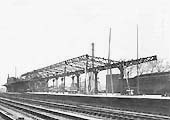
As a result of this scheme, the Great Western developed an
extensive improvement programme across its network. In the Warwickshire Area
this included quadrupling the Birmingham Main Line approaches (1933), New Goods
Facilities in Birmingham (1933) and reconstruction of Leamington Spa Station
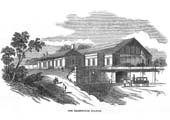
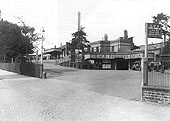
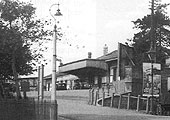
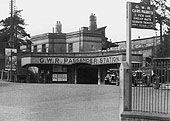
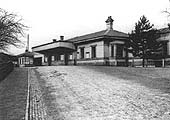
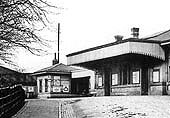
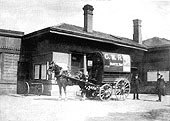
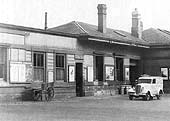
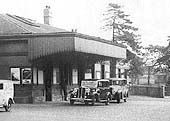
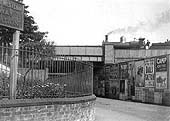
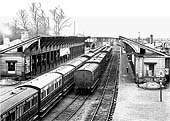
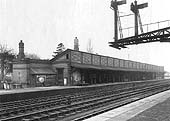
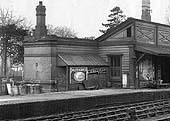
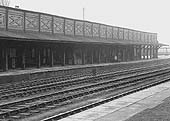
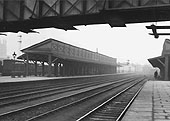
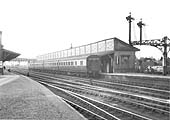
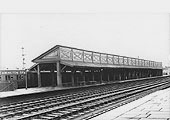
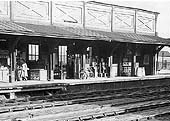
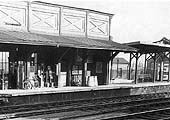
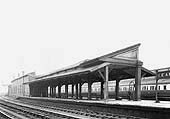
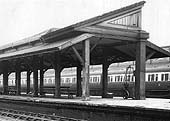
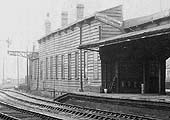
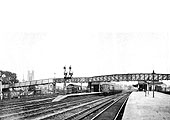
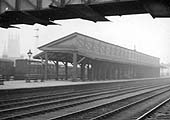
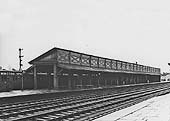
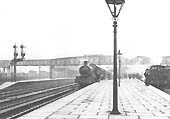
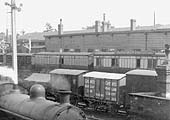
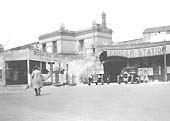
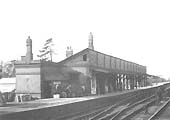
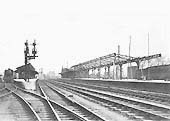
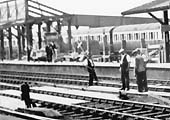
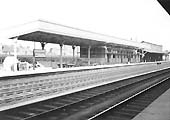
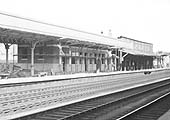
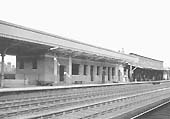
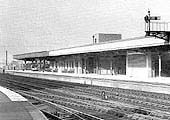
(1938). The first Leamington Spa Station had been built in 1853, but had been
modified piecemeal over the years, with extra buildings, removal of the overall
train shed roof, additional platform length and construction of a bay platform.
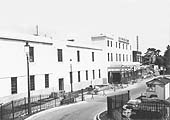
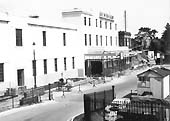
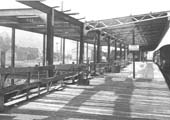
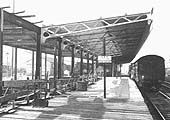
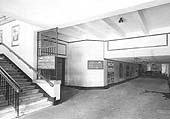
The planned new station would have wider platforms of standard height protected
by new longer canopies and connected by a new 15’ wide passenger subway
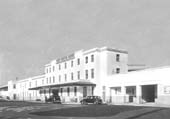
with electric lifts to each platform for luggage. A new approach road was to be
constructed to provide access at subway level and an impressive modern
‘Art Deco’ style, three storey station building faced with Portland
stone and granite would provide additional facilities for both passengers and
staff. Electric lighting would be provided to all buildings and the subway,
while modern gas lighting was to be provided to the platforms and station
approach roads.
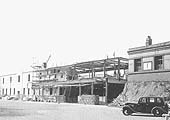
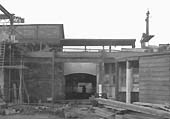
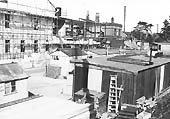
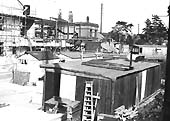
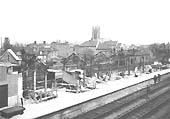
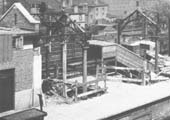
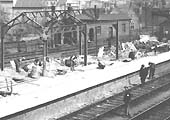
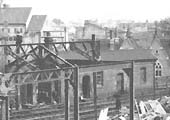
Normal traffic operation and passenger access was required
to continue during the station reconstruction work which resulted in the work
being carried out in a series of stages and taking almost two years to
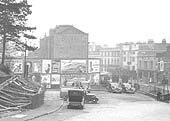
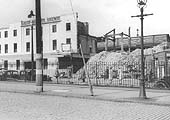
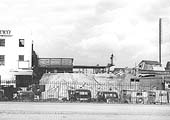
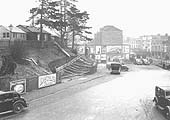
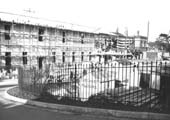
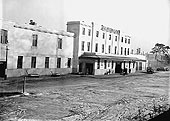
complete. A temporary booking office pavilion was built in the forecourt and
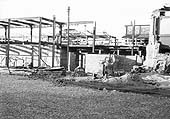
maintained almost to the end. The limited working space on the up platform
required all surplus materials from the excavation and demolition on this side
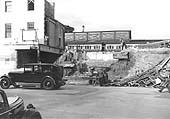
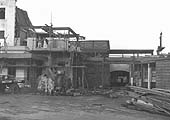
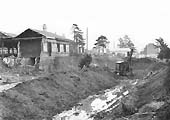
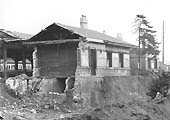
to be removed by rail. The initial stage was to construct the new subway,
excavate the forecourt, demolish the down side buildings and build new
retaining walls for the down platform. This was carried out by E.C.Jordan of
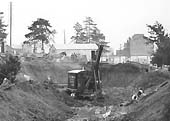
Newport, under a contract worth almost £20,000. Approximately 18,000
cubic yards of excavation were removed to form a forecourt, which extended over
¾ acre with a separate entrance and exit and 27,000 sq feet of surfaced
roadway and parking space. During the excavation water was encountered below
the platforms necessitating extra drainage and the provision of a 2”
cavity behind the walls.
Holliday & Greenwood were given a contract worth
£35,000 to erect new station buildings and carry out platform
alterations. The building was a prefabricated steel framed structure, sheathed
with brickwork and externally faced with white Portland stone above a
contrasting polished granite plinth. This granite plinth continued into the
booking office, with tiling above, while the subway was tiled through out
including the non-slip floor. The granite plinth was also retained on the 1st
floor platform side with the Portland stone facing on the pillars and
restaurant façade, but English bond brickwork on the remaining walls.
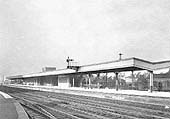
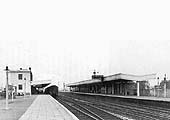
The new platforms were paved with precast slabs obtained from the GWR depot at
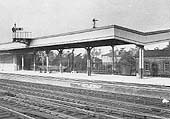
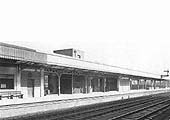
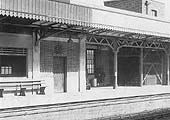
Taunton. The building roofs were flat surrounded by low parapets, while the new
canopies were conventional Great Western design, with zinc sheets over a
shallow reverse slope steelwork frame supported on cast iron pillars. The down
platform canopy had glass sections to provided natural light where it adjoined
the station building.
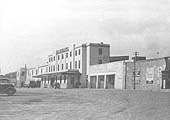
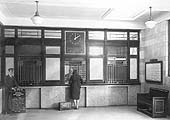
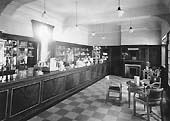
To the left of the main entrance on the ground floor of the
new station building (with direct access to the forecourt) were; the parcels
office, cloak room, cycle store and the refreshment room cellar. To the right
was the booking office and the entrance to the former passenger subway, which
on completion was converted to a public footpath allowing the removal of the
footbridge at the west end of the station. At platform level on the first floor
was a store, the refreshment room, down side waiting room and lavatories, pay
clerks office, bookstall, telegraph office, station master’s office, staff
office and mess room. On the up platform was a second refreshment room, a
bookstall, lavatories and a waiting room and on the top floor of the station
building was further office accommodation and at least one staff flat. The
reconstruction work was completed in 1939 and would have been the template for
several other stations, but for the start of the Second World War. The
construction quality is confirmed by the fact that after approximately eighty
years the station buildings at Leamington Spa Station have needed little
alteration.
Anyone interested in the history of Leamington station
must obtain copies of the Great Western
Railway Journal No 57 and No 58, edited by John Copsey. The two Journals
contain articles by Chris Turner and John Copsey which must be regarded as the
most extensive history of the station yet published. Many of the captions used
throughout this website's Leamington pages are inspired by or use their
exhaustive information. Local enthusiasts and historian's should count their
blessings that not only are they privileged to be able to see the railway scene
captured through HJ Stretton-Ward's lens but that they are accompanied by
Chris' and John's superb captions and research.
Use the links below to access the
following sections:
Exterior views of Leamington's original station
back to
top
Platform and lineside views of Leamington's original
station
back to
top
Rebuilding of the station viewed from Old Warwick Road
back to
top
Rebuilding of the down platform
back to
top
Rebuilding of the up platform
back
to top
External and internal views of Leamington's rebuilt main
station building
back to
top
Platform and lineside views of Leamington station's up
platform
back to
top
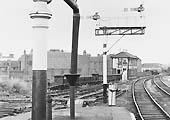
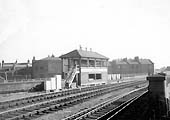
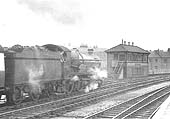
Leamington South Signal Box
back to
top
Platform and lineside views of Leamington station's down
platform
back to
top
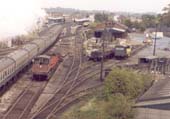
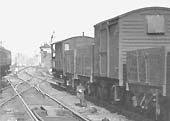
Leamington station's goods yard and sidings
back to
top
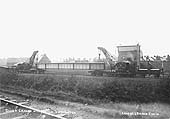
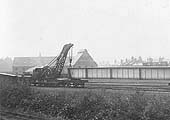
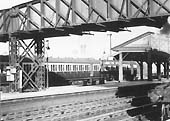
Rebuilding of bridge across the roadways at the junction of
High Street and Clement Street, Leamington
Extract from Great Western Magazine Vol. XIX. No.5 May
1907
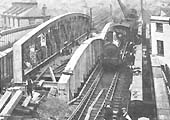
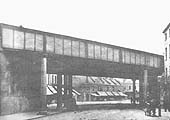
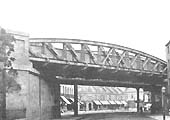
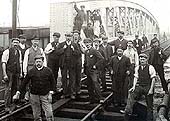
High Street Bridge: Leamington
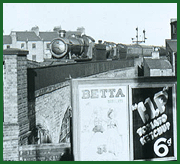
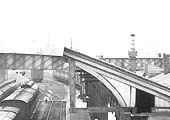
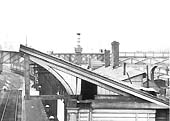
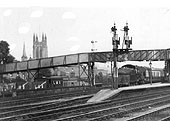
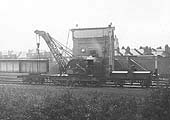
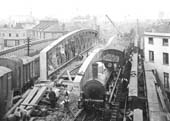
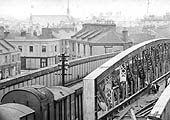
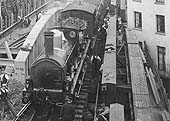
The Bridge carrying the Oxford and Birmingham Line across
the roadways at the junction of High Street and Clement Street, Leamington, was
recently rebuilt after an existence of fifty-five years, the structure
displaced having been provided at the construction of the line by Brunel about
1852. The old bridge consisted of wrought iron plate main girders with iron
cross girders and barrow rail flooring, support being afforded to the
superstructure by ten substantial cast iron columns rising from the footpath
below. Nine of these columns are dispensed with in the new bridge, (a single
column being provided for intermediate support at the apex of the angle of the
two roads), naturally with considerable advantage to the user of the busy
thoroughfares spanned.
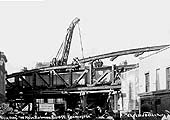
Special difficulties were encountered in the work due to two
conflicting causes – the proximity of the London and North Western Railway
bridge and the necessity for minimising as much as possible interference with
the traffic on the roadways. The span of the new outer girder on the up side is
150 feet, its weight 60 tons: and owing to insufficient space for staging on
site, it was built up on land adjoining the new engine shed, half a mile away,
whence it travelled whole to position for fixing. The forking of the roads
entailed a double span on the down side, and the two outer girders, having a
span of 100 feet each, were built on stages adjoining the bridge and traversed
into position. The two centre girders, the inner ends of which take their
bearings upon the column before referred to, were delivered on the ground
intact by the manufacturers. Work on the ground was completed in four weeks,
the up line being interlaced with the down while the up side was reconstructed
and the arrangements reversed for the reconstruction of the down line
portion.
The design and contract for the new bridge were prepared in
the Engineer's Office, Paddington, by the Ironwork Assistant, Mr F Gleadow, The
manufacture of the steelwork, 330 tons in weight, was undertaken by Messrs
Eastwood & Swingler, of Derby: and the work of erection at site was carried
out under supervision of the Divisional Engineer, Mr LR Wood, Wolverhampton,
practically the whole of the riveting being done by pneumatic riveting
machine.
Robert Ferris
back to top
Miscellaneous
back to top
Maps and Layout Drawings
General maps and schematics
1852 Map
1886 and pre-1900 Maps
1925 Maps
1939 Maps
back to top
|


 Donate
 Facebook
 Search