|
|
London North Western
Railway:
Midland
Railway:
Stratford
Midland Junction Railway
|
|
LMS Route: Rugby to Wolverhampton
LMS Route: Hampton in Arden to Whitacre
Hampton - Derby Junction: lnwrhiaj707a
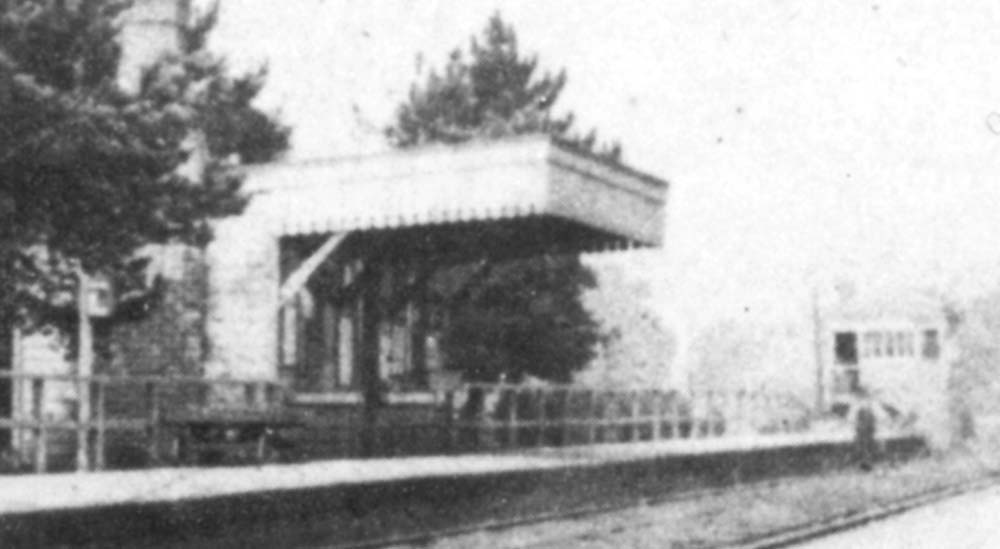 |
Close up of image 'lnwrhiaj707' showing the new LNWR down
platform and passenger facilities which were apparently built at the same time
as the new 'Hampton in Arden' station. The date of the structure can be
discerned from the style of the down platform structure which was only
introduced by the LNWR in the 1880s. The LNWR signal box seen at the end of the
platform apparently is of a style which predates the platform structure. As can
be seen, the LNWR down platform is significantly higher off the ground than the
middle and B&DJR platforms, which is another indicator of recent rebuilding
by the LNWR. The reason why the LNWR built another station a ¼ mile away
rather than upgrade this location is unknown and open to conjecture. One view
is that the new station, called Hampton in Arden to discriminate it from this
joint station, was better located. The LNWR was upgrading parts of the route at
the time coinciding with the opening of the branch between Berkswell and
Kenilworth. Hampton was an affluent area and the timetable reflected this
affluence as it enjoyed semi and express services to and from Birmingham and
London. In addition goods facilities were required and these were built to the
Coventry end of the new station. The continuation of the existence of the
Midland service to Whitacre and the LNWR's action of upgrading a station, which
saw very little connecting traffic, might be explained by the legislation
originally passed. Railways had a much greater significance than they do today.
Not only were they designated a 'common carrier' meaning that they were
compelled by law to carry ALL traffic and at a predetermined rate, they also
had provide a minimum level of service both in the number of trains and fares
charged. In all probability the effort, cost and lengthy procedure involved in
closing the line resulted in the Midland Railway operating a minimum level of
service for some seventy years after it lost its viability. The LNWR might too
have been compelled to provide a connecting service forcing them to initially
renew the station at a time they were building a new station a ¼ mile
away.
 back back
|


 Donate
 Facebook
 Search